
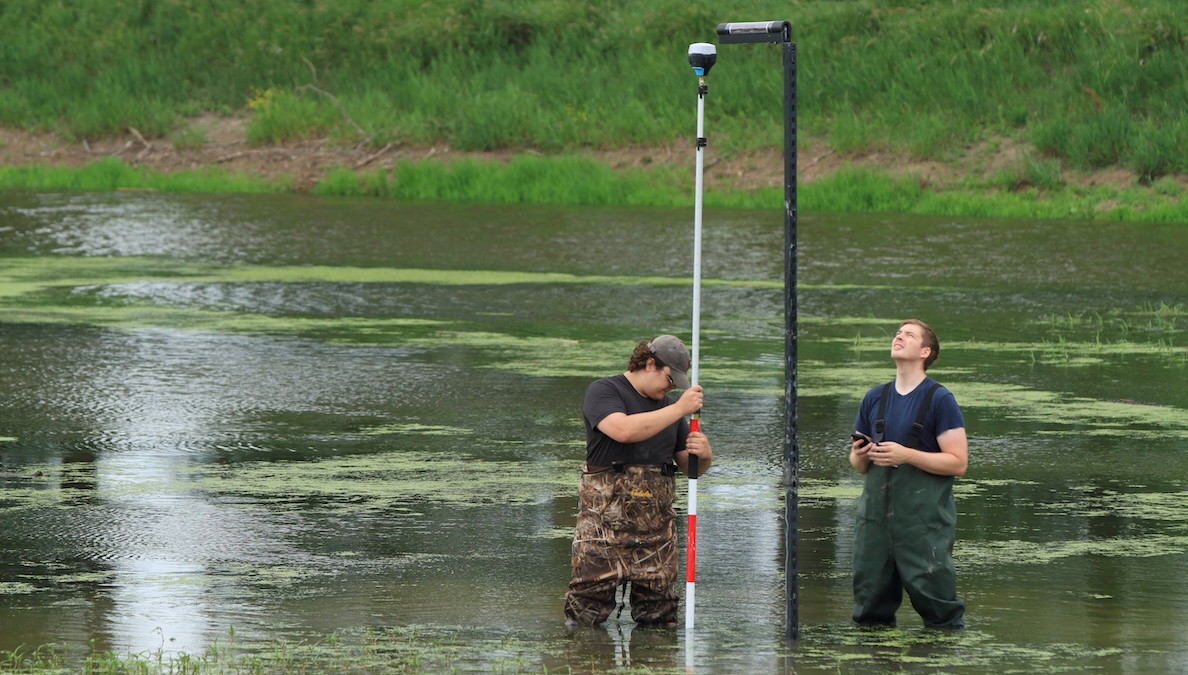
When Branko Kerkez reflects on Hyfi’s beginnings, the story now feels inevitable. The Ann Arbor–based water technology company, which he founded with CEO Brandon Wong in 2014, was guided by a simple principle: aligning their love of technology with a desire for social impact. But from the start, Hyfi’s progress didn’t happen in isolation. Its work grew inside a broad network of municipal, academic, nonprofit, and watershed partners – teams brought together through early support from the Great Lakes Protection Fund (the Fund).
Kerkez, who is the Chief Technology Officer at Hyfi and teaches at the University of Michigan, had long been searching for ways to connect modern tools—AI, sensors, and data systems—to one of the most pressing human challenges: water management. The field offered a perfect proving ground to test how technology could make infrastructure smarter, more affordable, and more equitable—and lead to better water quality outcomes.
Early conversations with water managers across the Midwest revealed a common challenge: too much water. Excess water—especially when it comes all at once and in places with aging infrastructure—can be detrimental to local communities and waterways. The record-breaking Detroit flood of 2014 underscored how outdated drainage systems struggled to keep pace with more frequent and intense storms.
Bridging the Gap Between Floods and Infrastructure
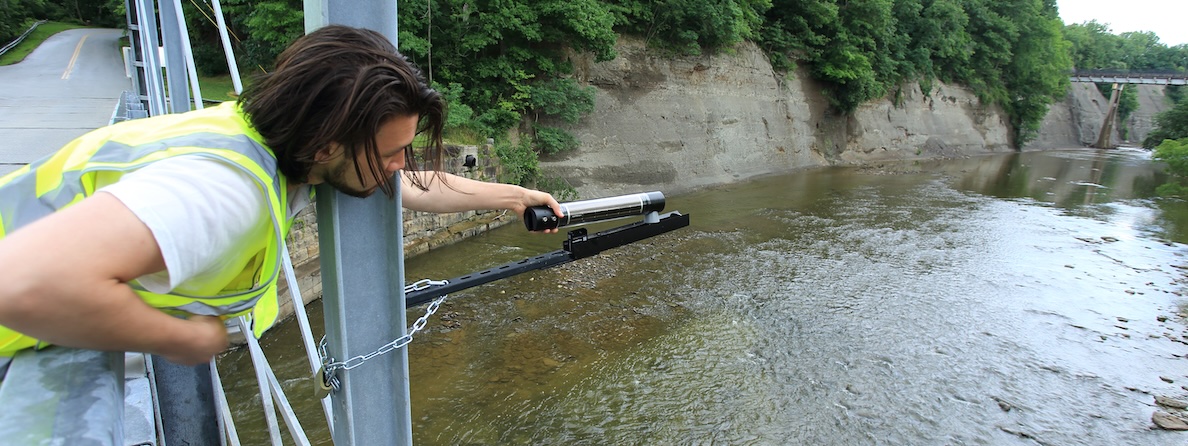
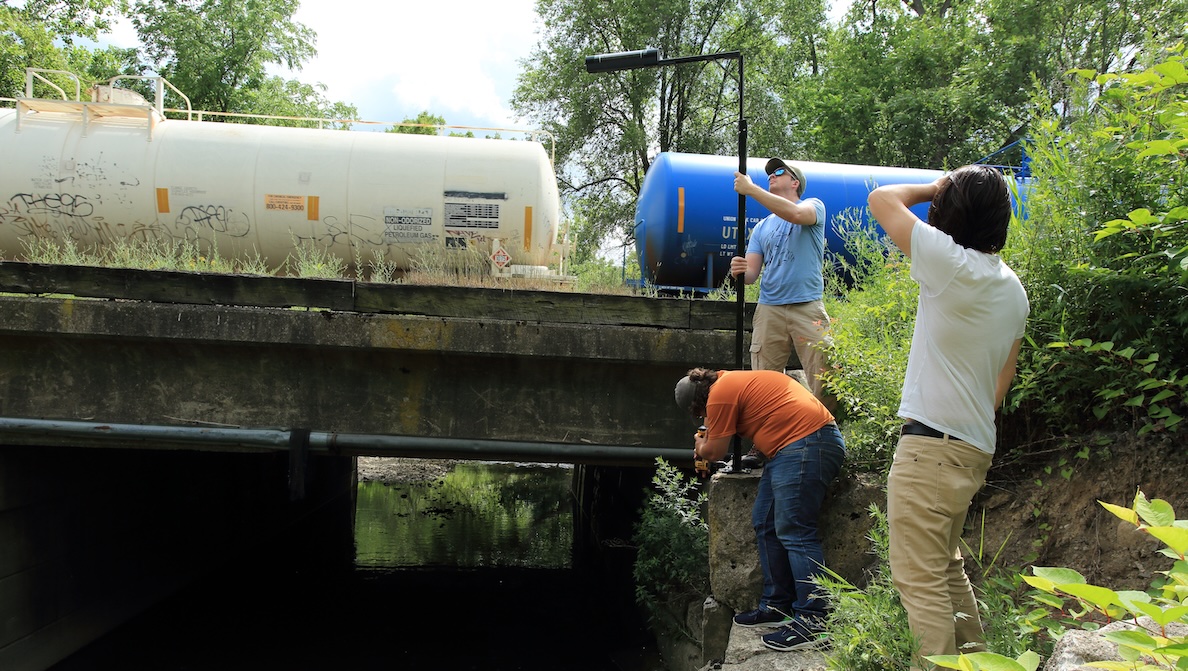
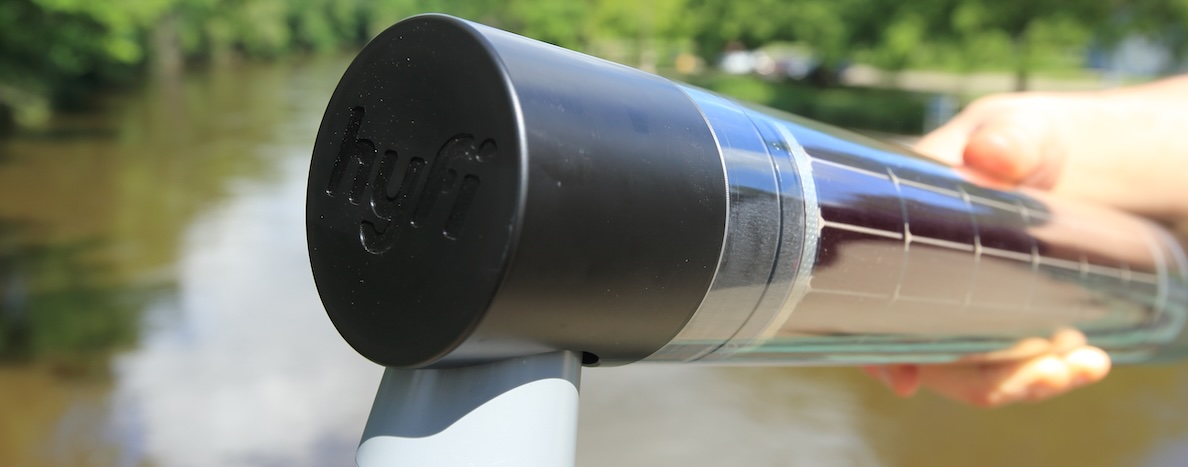
Water managers were doing everything they could with limited tools, but it wasn’t enough. Hyfi and its partners saw an opportunity to change that. Together, they began developing compact, wireless sensors that cities could install on bridges, culverts or lakes to monitor water levels and quality in real time. These sensors give water managers actionable data to prepare for storms, prevent overflows, and improve water quality before issues arise.
“Engineers traditionally solve big problems with big infrastructure,” Kerkez explained. “But most communities don’t have billions to spend on massive tunnels or upgrades. Sensors give them visibility, they no longer have to manage water blind.” By predicting floods hours in advance and identifying when water quality is at risk, local teams can better control stormwater flow, reduce pollution from runoff, and keep contaminants from reaching nearby rivers and lakes. The data helps prevent sewer overflows and reduce sediment and nutrient loading that degrade water quality across the Great Lakes basin.
Working alongside researchers and municipal field teams, Hyfi spent months shadowing field technicians, observing how they juggled emergencies with limited resources. “We saw people racing between flood sites, while at home they had smart thermostats and voice assistants,” said Kerkez. “It was clear the water sector had been left behind by the tech revolution.” Hyfi’s goal became clear: make powerful technology simple enough for anyone to use. By building tools that install easily and run automatically, they empower communities to manage water proactively.
What bubbled up was a radical idea: what if water systems could manage themselves—like self-driving cars? Cities, such as South Bend has pioneered early ideas on real-time control of sewers, in collaboration with groups such as EmNet. At the time, however, few people were talking about sensors or AI in public works. “We were the weirdos in the room,” Kerkez laughed. “But we wrote our first proposal to the Fund for a ‘self-driving water system,’ and to our surprise, they said, ‘Go for it.’”
From Big Ideas to Simple Problem Solving
If Hyfi’s early vision was bold, the Great Lakes region was the perfect testing ground. “This area has every water challenge imaginable,” said Kerkez. “We have floods, we have algal blooms, we have legacy infrastructure—it’s all here.”
Early Fund support did more than enable research; it allowed Hyfi and its collaborators to test ideas in real-world environments, bringing together communities, universities and watershed organization into teams that could deploy and scale solutions regionwide.
The first prototypes were rough sketches of what would become today’s streamlined system. After years of iteration across multiple partner communities, the team developed wireless, affordable devices that install in minutes and deliver real-time insights into both flooding and water quality.
Cities like Cleveland and Dearborn, Michigan, along with partners such as the U.S. Fish and Wildlife Service and state Departments of Transportation, now use Hyfi’s network to track rainfall, lake levels, and water quality indicators. The technology helps them reduce overflows, anticipate maintenance needs, and protect waterways from sediment and nutrient pollution – all while saving money and easing the strain on local staff.
“Flooding is where we started,” said Kerkez. “But managing how and when water moves also improves what’s in it. When you prevent erosion or runoff, you protect the ecosystems downstream. Better water management means cleaner water overall.”
The Power of Partnership
Throughout Hyfi’s journey, the Fund has served as both collaborator and catalyst. “They don’t just fund research,” said Kerkez. “They push you to think about how your work will actually change systems.”
Their early support and introductions to key partners helped expand the project’s reach. That groundwork led to findings that Detroit could save hundreds of millions of dollars simply by optimizing how it operated existing pumps – proof that smarter management can rival large-scale construction in impact.
Since then, Hyfi has forged partnerships with municipalities, and even corporations like Verizon, a pivotal partner that recognized technology’s potential for climate resilience.
The throughline is clear: partnership didn’t just help Hyfi scale, it shaped an entirely new model for how water systems can adapt in an era of rapid environmental change.
Collaboration in Action
Hyfi’s partnerships have demonstrated the versatility and impact of its technology across ecological, educational, and community-driven missions.
At the Shiawassee Wildlife Refuge, the U.S. Fish and Wildlife Service collaborated with Hyfi to manage water levels across 1,000 acres of wetlands, optimizing habitat conditions for wildlife and improving fish passage. These demonstrations helped de-risk the technology for additional public-sector partners. As a result, the Michigan Department of Natural Resources is now an active user of the tools validated during these pilots.
Recognizing that smaller communities often lack the resources to adopt new technologies independently, Hyfi and the Chagrin River Watershed Partners (CRWP) co-developed a regional aggregation model to expand access to real-time hydrologic monitoring. CRWP served as a trusted convener, uniting multiple municipalities such as Bentleyville and Chagrin Falls into a shared hydrologic network. By managing procurement and operations on behalf of participating towns, CRWP reduced administrative burdens and proved the effectiveness of scaling technology deployments through non-profit intermediaries.
Earlier foundations for this work were established through university partnerships with the Huron River Watershed Council, which helped create one of the most instrumented river basins in the Great Lakes region. Today, more than 20 dams are actively controlled using real-time data and open-source sensors – highlighting how collaborative research, federal pilots, and regional partnerships together build a powerful pathway for advancing modern watershed management.
Where Innovation Meets Impact
The results are already visible. Hyfi’s systems help cities reduce combined sewer overflows, limit nutrient pollution that fuels algal blooms, and keep sediment out of waterways. Every data point gathered contributes to a clearer understanding of how to protect the Great Lakes from the cumulative impact of urban runoff and storm surges.
Kerkez believes this type of technology marks a turning point for water management. “We’re entering a digital age of water innovation,” he said. “Cities are moving from reacting to problems to preventing them. And thanks to partners like the Fund, we’re proving that technology can make water cleaner, infrastructure smarter, and communities stronger.”
For Kerkez, the most rewarding part has been watching his former students who now lead this work at Hyfi and beyond. “It’s a super inspiring crew of people who care deeply about both tech and sustainability,” he said. “And the Fund helped make that possible.”
To learn more about Hyfi please visit hyfi.io. For more information on what we do at the Great Lakes Protection Fund, see our impact page.